Demo debuts at The HFA Show 2027, Las Vegas, March 10 to 12. Book a demo
Physical AI Recovery

Intelligent Research-Backed Recovery

Accelerated recovery. No staff. Fully clothed. Fully automated.
Members lie down in their workout clothes, choose a program, and Bolt does the rest.
The Bolt Difference

Personalized Recovery in 87% Less Time Required Than Traditional Massage, Priced for the Gym

García-Sillero M, et al. Int J Environ Res Public Health. 2021;18(2):647. 2 minutes of percussive therapy vs 15 minutes of manual therapy, with similar tensiomyography recovery measurements. How it works
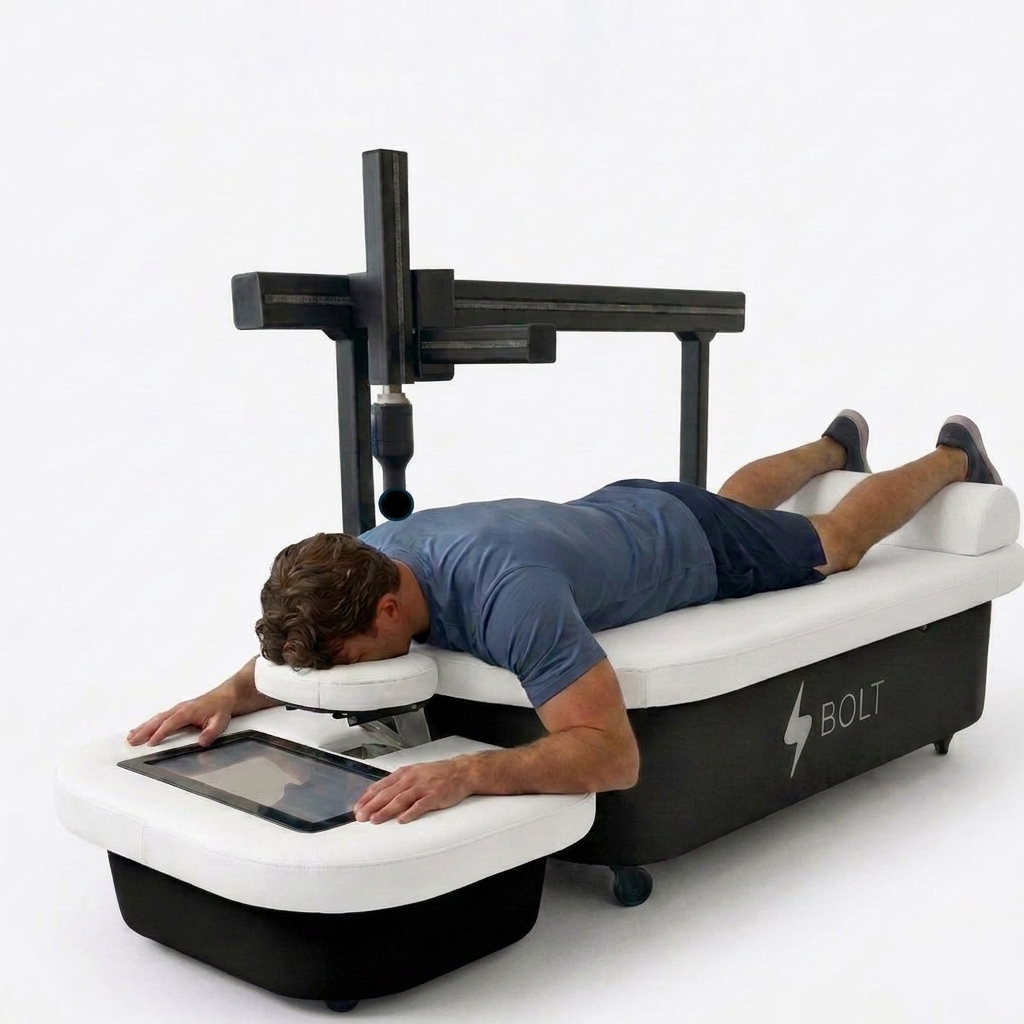
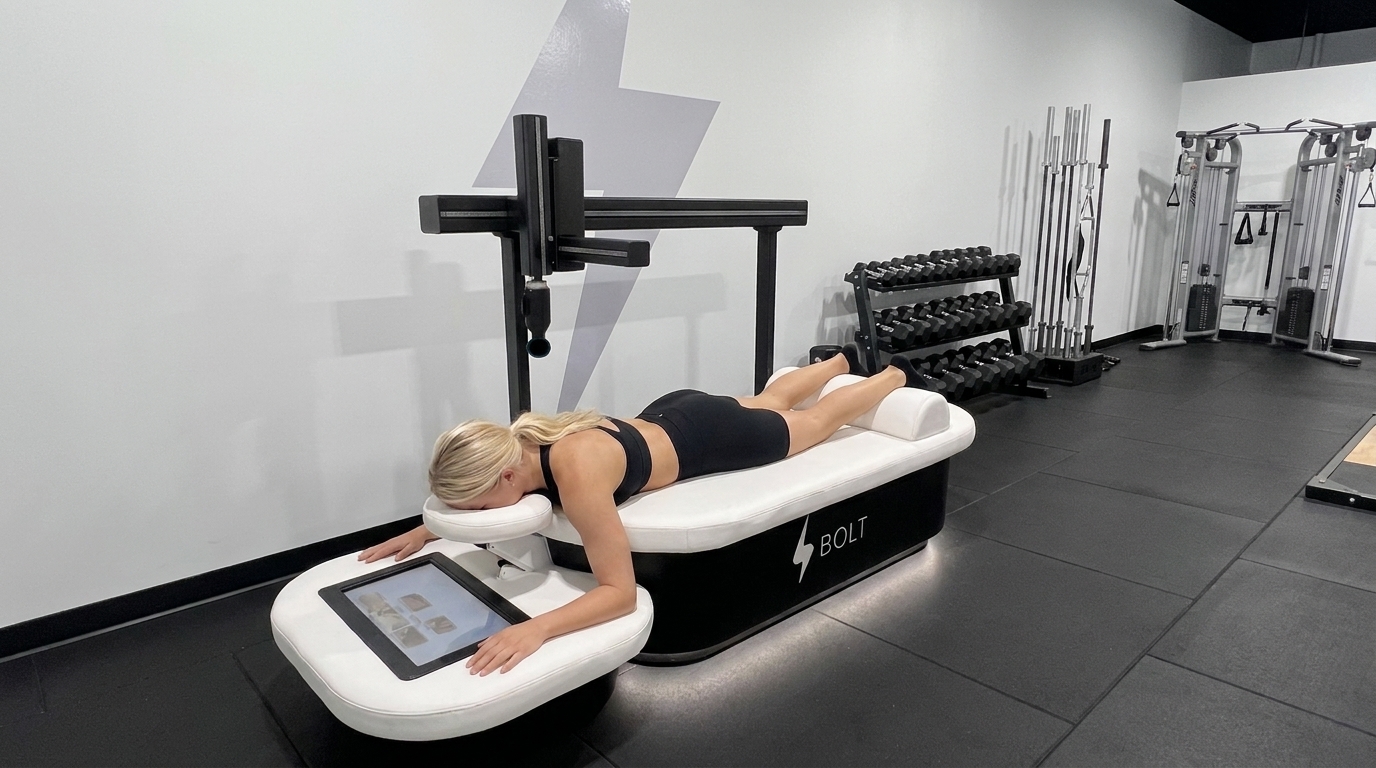
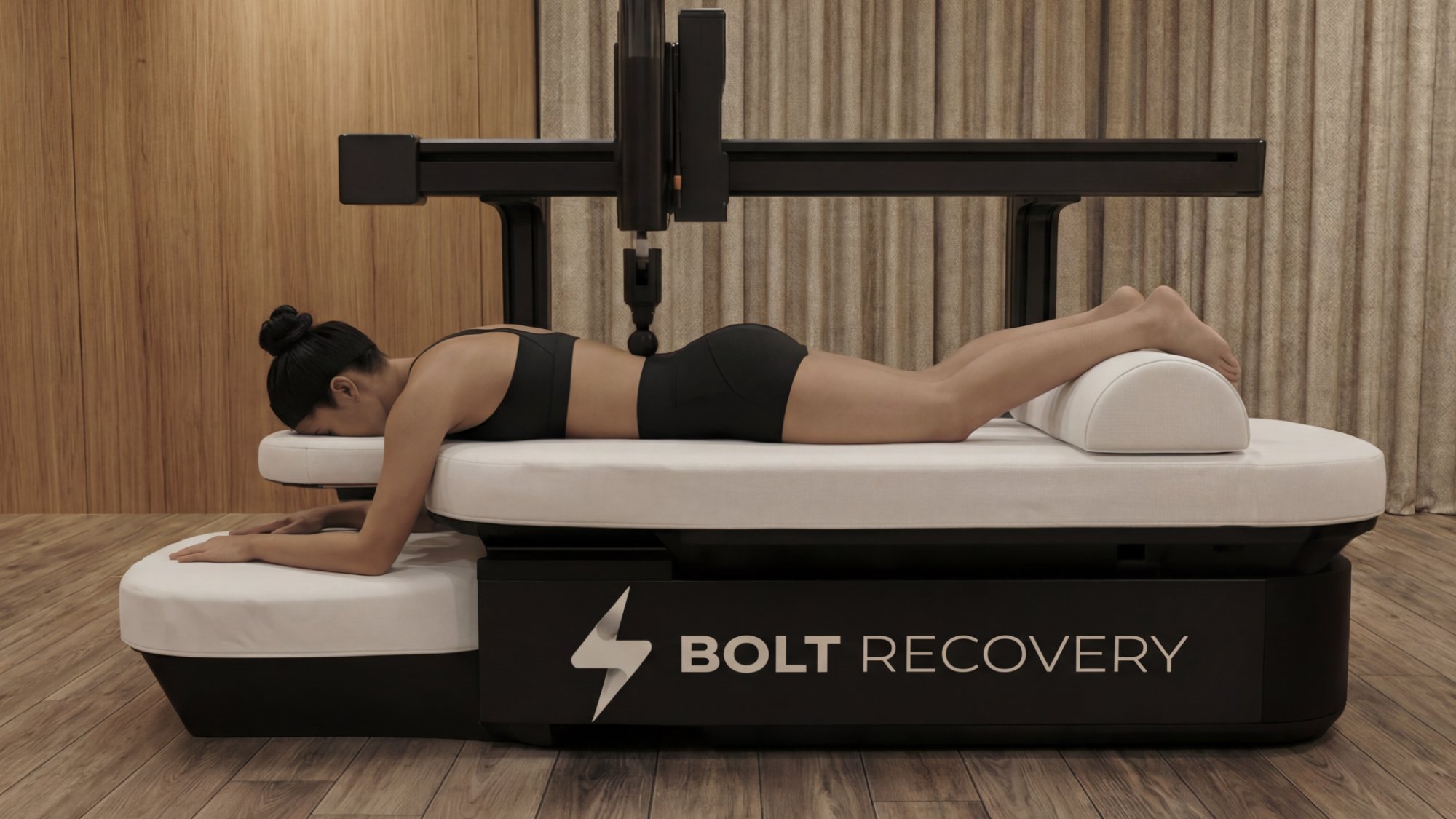
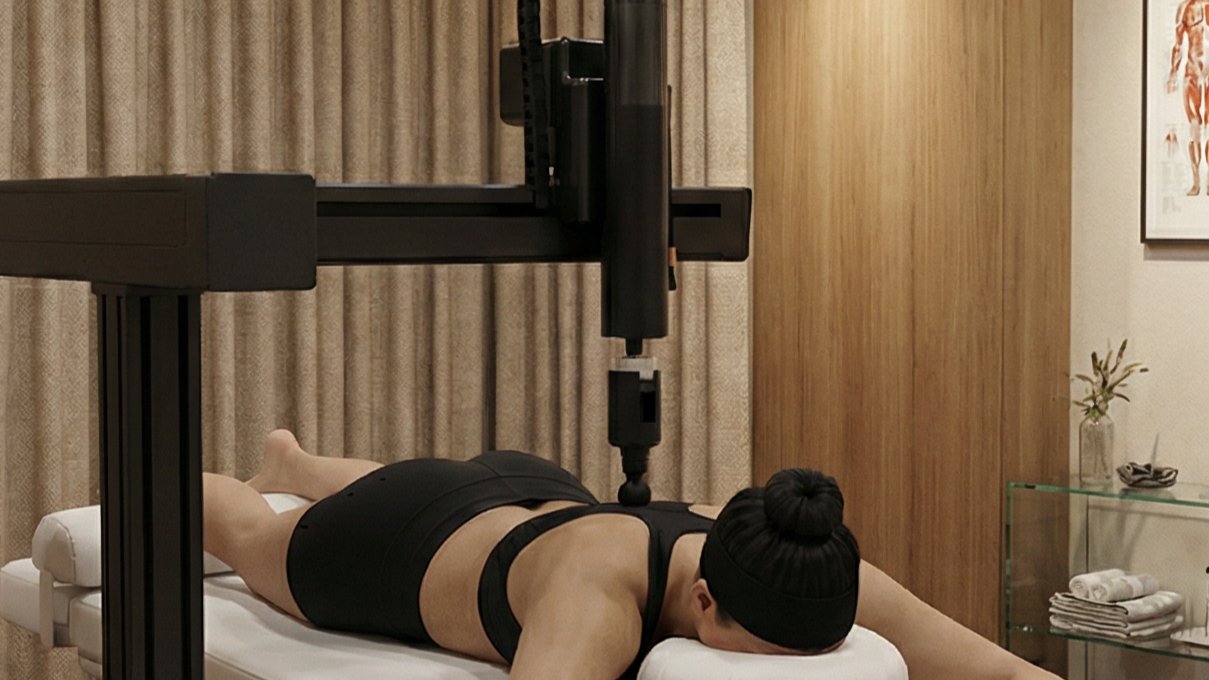
Bolt Recovery robotic percussive massage system in use
The New Recovery Standard

An Automated Massage Table at the Gym
Should Be Standard.

We believe an automated massage table should be as common at the gym as a massage chair or lounger. Bolt adds personalized recovery backed by research, where chairs and loungers can't.

Robotic massage tables have been priced out of reach for gyms. Bolt is the missing piece: an automated massage table priced for the gym floor, so members get the consistent, personalized, elite recovery they need and operators can afford it.

Bolt Recovery member session fully clothed at commercial gym

Set the pressure

From light release to deep percussion. Adjust intensity at any point during your session.

Select your program

Pain relief or exercise recovery, built around your pain location or your exact workout.

Full control, always

Adjust pressure, speed, and location live. View your routine and real-time treatment location. Pause or stop instantly.

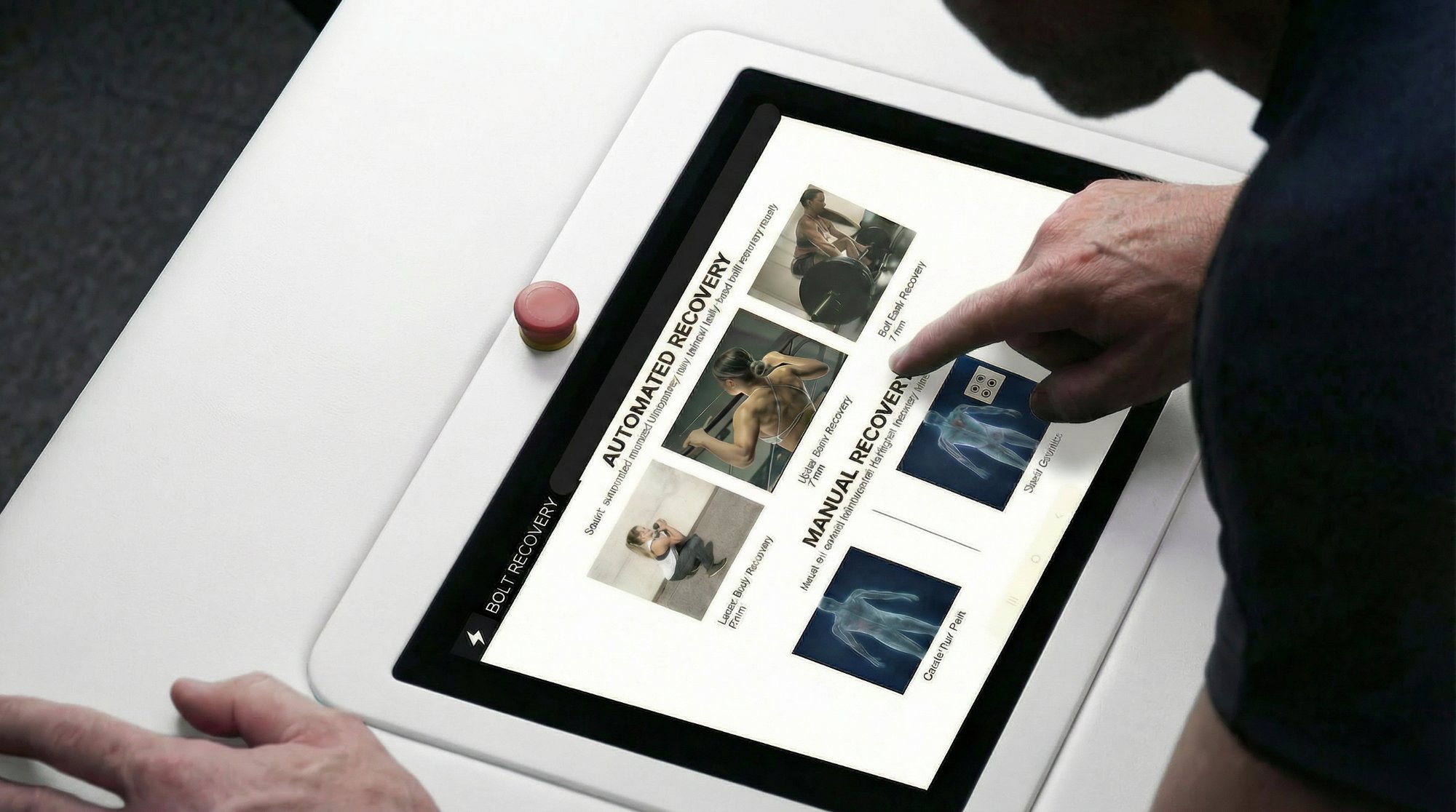
Bolt touchscreen live body map
Touchscreen Control

Your session.
Your fingertips.

A dedicated touchscreen between the elbow rests shows your full routine and real-time treatment location on a live body map. Select your program, adjust pressure, percussive speed, and location at any point.

The clinical intelligence layer maps your pain location to the full kinetic chain. The platform is programmable — gym operators can build proprietary recovery routines, physical therapy groups can build clinical protocols.

How it works
Pain Relief Programs

Where it hurts.

Routine engine built on your exact pain location.

Select your pain location on the touchscreen. Bolt maps it to the primary muscle, then automatically identifies the satellite trigger points and fascial line connections that clinical research says are causing it. Your session treats the full kinetic chain, not just the symptom.

Exercise Recovery Programs

What you trained.

Routine built on your exact workout recovery needs.

From back day to leg day to upper body to cardio, run, ride, and more, across dozens of workout recovery routines. Bolt builds your session around the exact muscles you just loaded, in a recovery sequence informed by research on exercise-induced muscle damage.

This Is Physical AI

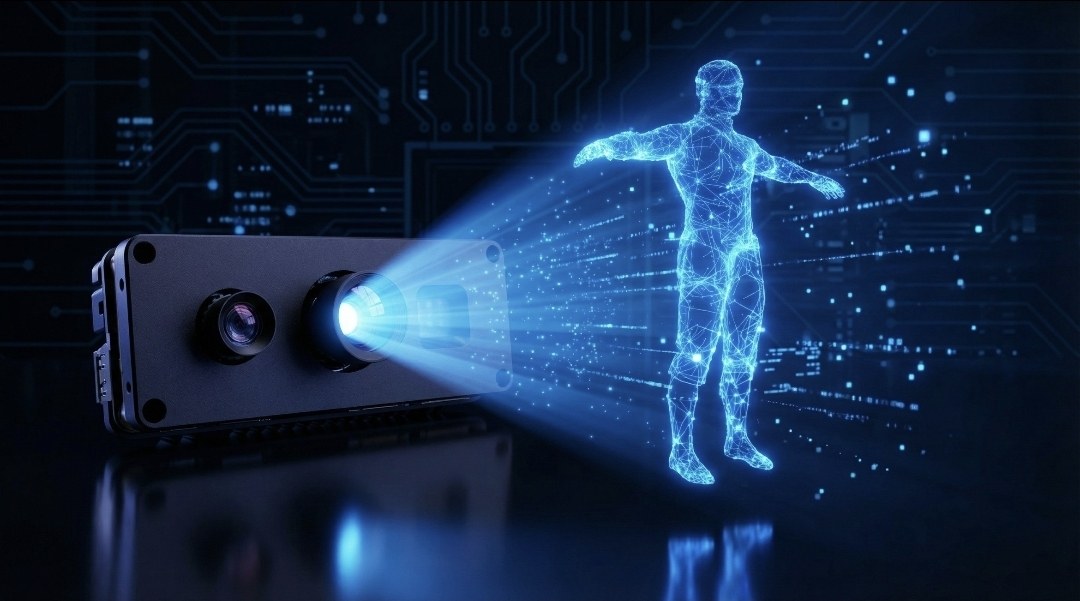
A Time-of-Flight sensor array is how our AI perceives you.

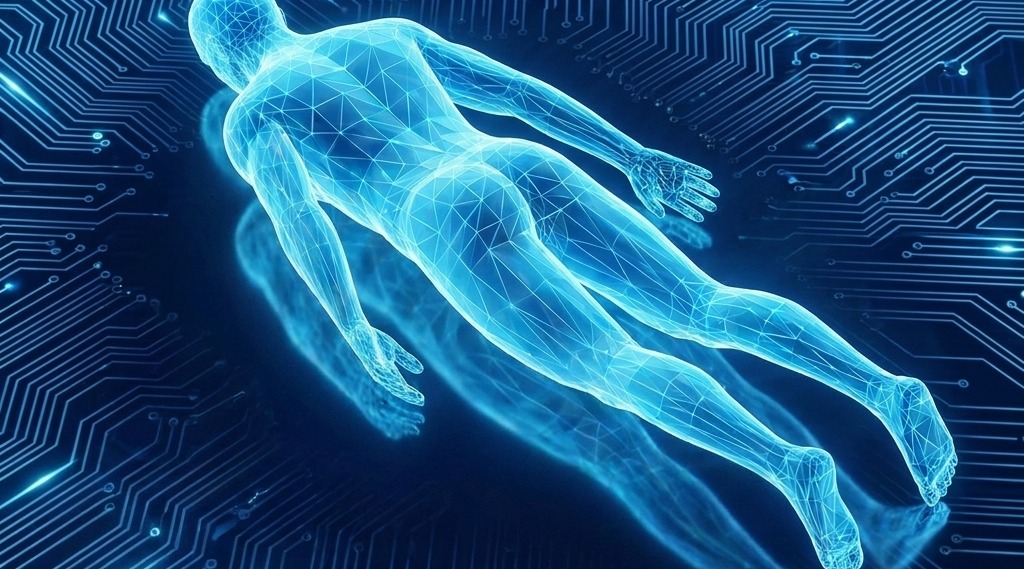
Before every session, Bolt's Time-of-Flight AI camera maps your exact body geometry, posture, proportions, and contours, using 1.49 million data points per scan. Every treatment path is scaled to your measurements on that visit. Not an average. You. Every time.

1.49M+
Data points per scan
Patent Pending · Fully Developed
Bolt 3D Time-of-Flight body scan

From this scan, your entire session is built.

Physical AI Recovery Session

Set Up. Scan. Personalize. Recover. Track.

A member walks up, and Physical AI handles the rest.

Bolt Recovery member lying down, ready for session
01
Set Up

Member Lies Down

No equipment to configure, no staff to wait for. Lie down in your workout clothes and begin.

Bolt 3D Time-of-Flight body scan of member in prone position
02
Map Your Body

3D Scan, In Seconds

The Time-of-Flight camera maps your body geometry and calibrates your session automatically.

Bolt touchscreen session control
03
In Your Control

Touchscreen Control

Select your program, adjust pressure, percussive speed, and location at any point.

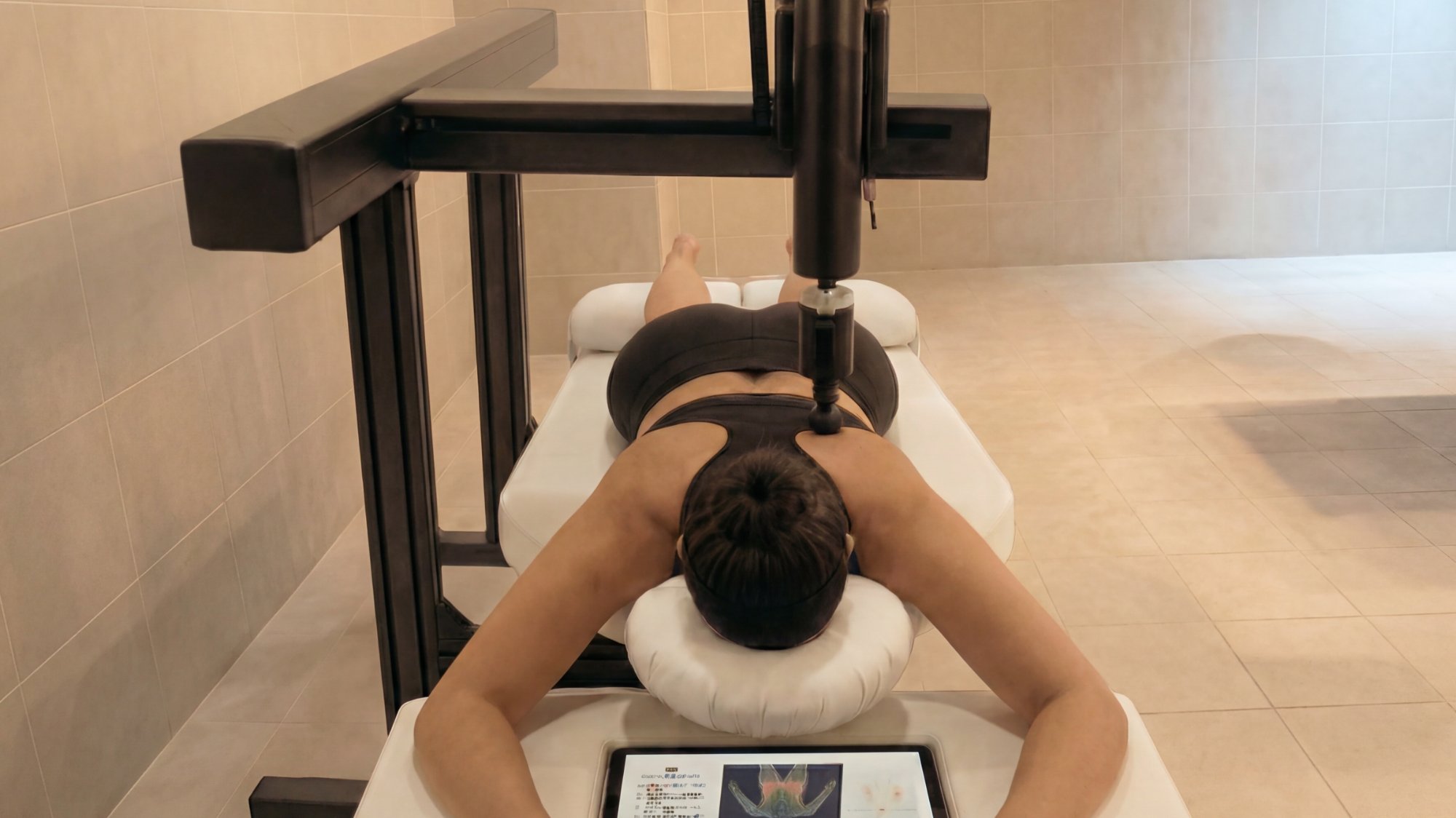
Bolt percussive massage delivery, overhead view
04
Precision Recovery

AI-Calibrated, Hands-Free

2 minutes of percussive massage equals 15 minutes of manual massage per muscle group. Backed by 4 cited studies and 19+ research publications.

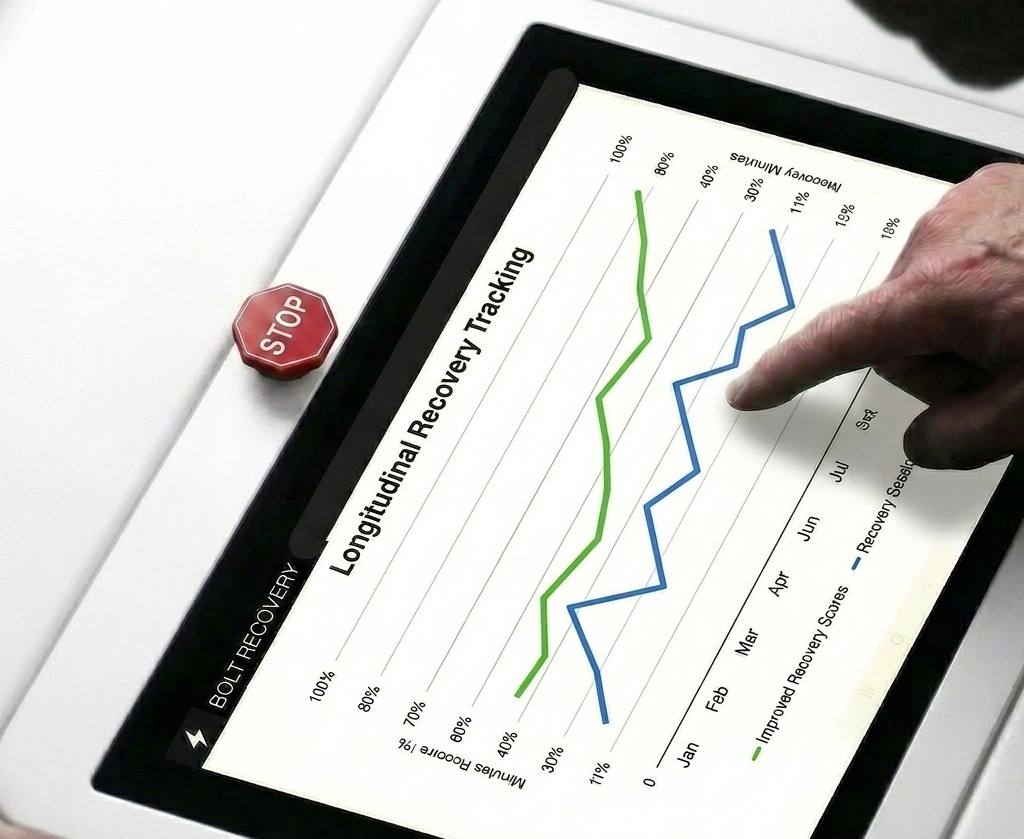
Bolt touchscreen showing longitudinal recovery tracking over time
05
Track Progress

Progress You Can Feel

Every session feeds data back to you: what was treated, when, and how your body responds over time.

The Demand Is Already There

Surveyed across HVLP members.

83%
want automated percussive massage at their gym today
91%
would pay $10 to $50 for a single session
75%
would pay $10 per month as a membership add-on
72%
would pay $20 to $50 for a single session

Bolt HVLP Consumer Survey, Pollfish, 350+ participants, Aug 2025

Scientific Validation

Recovery in 87% less time required than Traditional Massage

Bolt Recovery
87%
LESS TIME REQUIRED

If Bolt is priced as a modest membership upgrade, daily use could cost a member less than $1 per day, versus $100+ for one traditional massage.

VS
Traditional Massage
$100+
PER SESSION

Expensive, time-consuming, and inaccessible for most gym members. Most skip recovery entirely, until now.

García-Sillero M, et al. Int J Environ Res Public Health. 2021;18(2):647. 2 minutes of percussive therapy vs 15 minutes of manual therapy, with similar tensiomyography recovery measurements.

Backed by 19+ supported studies See how it works
How Bolt Compares

Personalized recovery, priced for the gym floor.

Most recovery is either affordable but generic, or personal but out of reach. Therapists are limited by hours, and chairs and red light run the same session for everyone.

Percussion is a linear stroke, so Bolt uses a Cartesian gantry, like a large 3D printer, instead of a six-axis robotic arm. That keeps it at $18,000 to own, against $75K to $200K for other robotic systems, and the rigid frame is built to deliver deep, measured pressure for athletic recovery.

Scalability
Personalization
Foam rolling
Massage chair
Red light
Cryo
Other robotic
($75K-$200K)
Massage lounger
($20K+)
Human therapist
BOLT

Prices based on publicly listed figures, October 2026.

Bolt Recovery percussive therapy session
For Gym Operators

A profit center,
not a cost center.

No staff required. High ROI for operators.

Full ROI analysis and revenue calculator
Pilot Program

Lead Your Market.

Pilot partners lock in preferred pricing, get priority installation, and bring recovery technology no competing gym in their market has yet.

01
Preferred pricing, locked before public launch
02
Fast ROI and payback for operators
03
Member differentiation, offer something no competing gym has yet
04
Priority installation, ahead of public launch
Become a Pilot Partner
Questions

Everything you need to know.

Session experience, research evidence, operator ROI, and pilot details.

Contact us
A Bolt session runs 10 to 15 minutes depending on the program selected, with recovery in 87% less time required than traditional massage (García-Sillero et al., 2021: 2 minutes of percussive therapy vs 15 minutes of manual therapy, similar tensiomyography recovery measurements; see how it works). No booking required. Members walk up, begin at the touch of a button, and have full touchscreen control throughout, including a real-time view of the routine and their current treatment location, plus live adjustment of pressure, percussive speed, and location.
No. Every Bolt session is delivered fully clothed. Members lie down in their workout clothes. No undressing, no robe, no changing room required.
No. The AI body scan, program selection, and session all run from the member-facing touchscreen.
Select where it hurts on the touchscreen. Bolt maps that location to the primary muscle, then automatically identifies the satellite trigger points and fascial line connections that trigger point and myofascial research links to the pain. The session addresses the full kinetic chain, not just the symptom. One tap. Your session is ready.
The member selects what they trained, from back day to leg day to upper body to cardio, run, ride, and more, across dozens of workout recovery routines. Bolt builds the session around the exact muscles they loaded, in a recovery sequence informed by research on exercise-induced muscle damage.
Massage chairs deliver generalized vibration to a fixed body position. Bolt delivers research-backed percussive therapy through a 3D scan-referenced robotic system that maps to each member's exact anatomy. Recovery in 87% less time required than traditional massage: a randomized study (García-Sillero et al., 2021) found 2 minutes of percussive therapy produced recovery measurements similar to 15 minutes of manual therapy, with participants lying face down on a table, the same position as a Bolt session. Massage chairs have no equivalent evidence base. Beyond the physical difference, Bolt delivers personalized recovery programming, including exercise-specific recovery routines and pain-location therapeutic programming, structured in detail for your exact recovery needs, something massage chairs and loungers simply cannot provide.
Handheld devices require the user to apply them, which limits reach, consistency, and accuracy. The studies we cite used a handheld device applied with a standardized protocol, not self-applied by members. Bolt applies percussion in a controlled, repeatable way and treats the full bilateral posterior chain in a single session.
Not yet. Our own studies are planned for 2027 with pre-production units. Until then, our research-backed claims rest on published work. The most direct result, García-Sillero et al. (2021), found that 2 minutes of percussive therapy produced tensiomyography recovery measurements similar to 15 minutes of manual therapy, with participants lying face down on a table, the same position as a Bolt session. That study measured one muscle in one leg using a handheld device. Nothing in the result is specific to that one calf, so we expect the same ratio to hold across both legs and more muscles, which is why our studies test it step by step with Bolt's robotic delivery.
Robotic percussive massage systems using six-axis arms cost from $75,000 to own. Other robotic massage systems range from $125,000 to $200,000. Massage loungers, the current standard automated recovery amenity, cost $20,000 or more. Bolt's patent pending Cartesian architecture delivers research-backed percussive recovery at a fraction of the cost.
Yes. Bolt uses an industrial-strength robotic Cartesian gantry, efficiently designed to deliver precision percussive therapy. In combination with Time-of-Flight 3D scanning, Bolt delivers automatically calibrated percussive massage routines. Its industrial-strength frame delivers more capable deep tissue pressure than other robotic massage systems, which use six-axis robotic arms. As a result, Bolt can support a price of $18,000 to own, while other robotic massage systems are priced from $75,000 to $200,000.
At 20 sessions per day at $10 per session, Bolt generates $5,200 per month in gross revenue against a $50 platform fee, paying back the $18,000 purchase price in under four months. Revenue starts from session one. Zero additional labor cost. See the full ROI analysis on the Business ROI page.
Each gym sets its own price. Bolt is designed to fit a modest membership upgrade, which could work out to less than $1 per day.
Bolt is currently in the pilot partner phase. The commercial demo debuts at The HFA Show 2027 in Las Vegas, March 10 to 12, with pilot installations beginning in fall 2027. Pilot partners receive preferred pricing, priority installation, and direct input into the final product design.
SweatWorks
Engineering Partnership

Bolt Recovery is engineered in partnership with SweatWorks, the fitness industry leader in digital fitness and custom hardware integration.