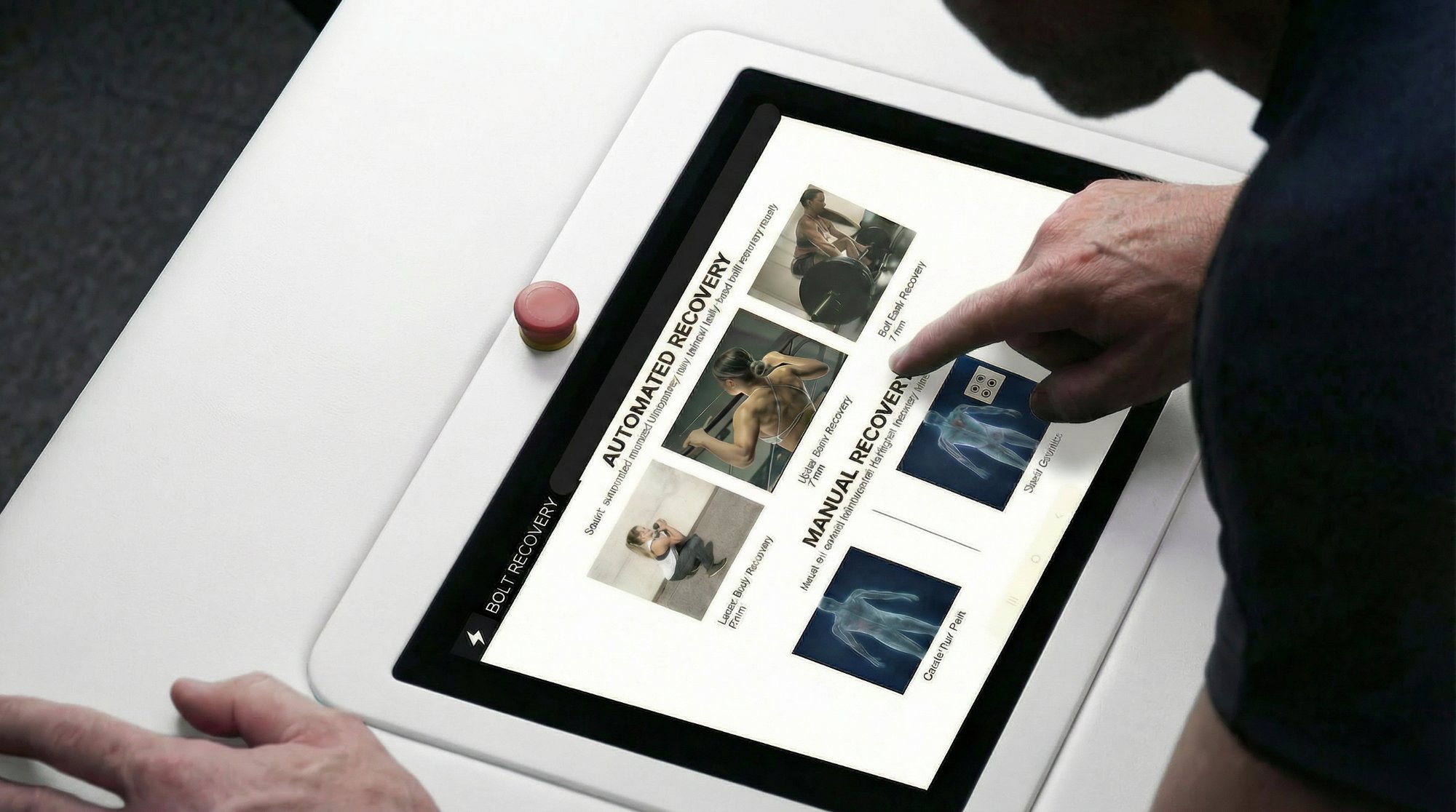
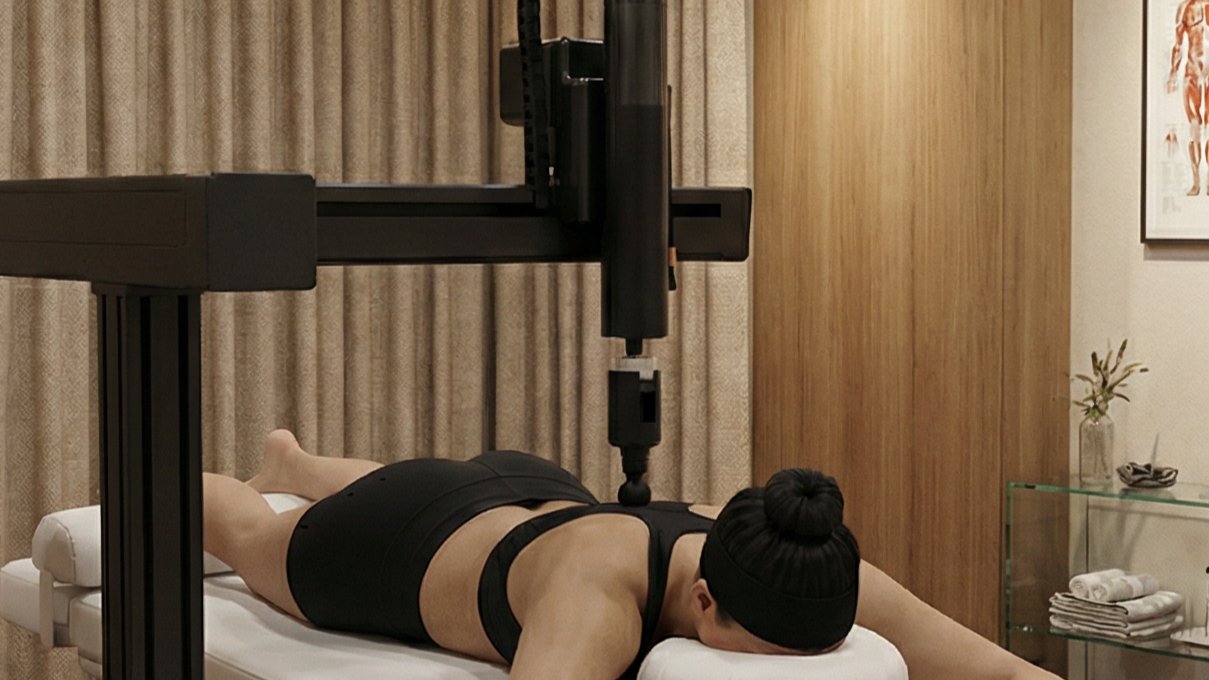
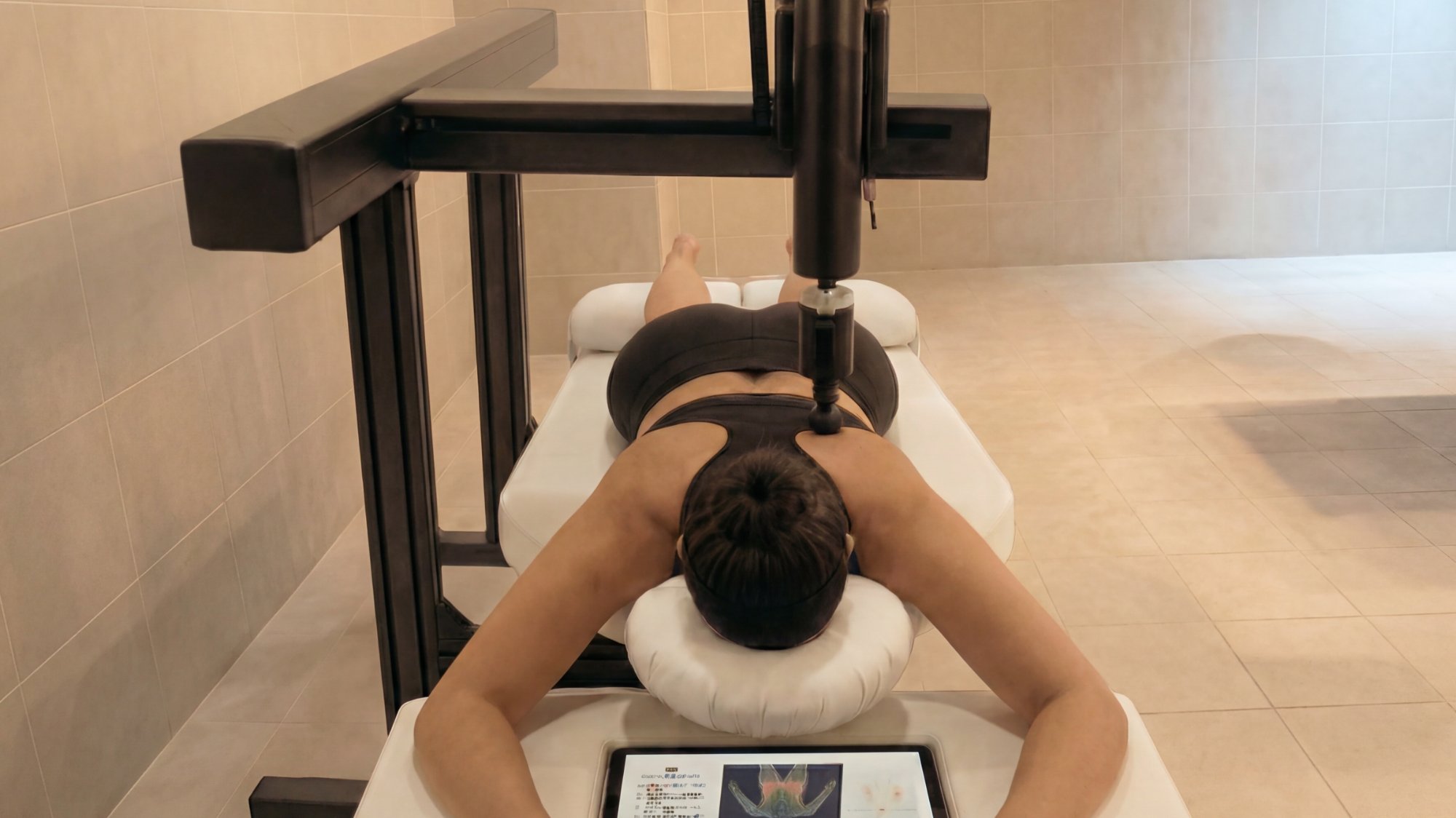
A member walks up, gets scanned, and receives a clinically-validated percussive massage, without a single staff interaction. Here's exactly how it works.
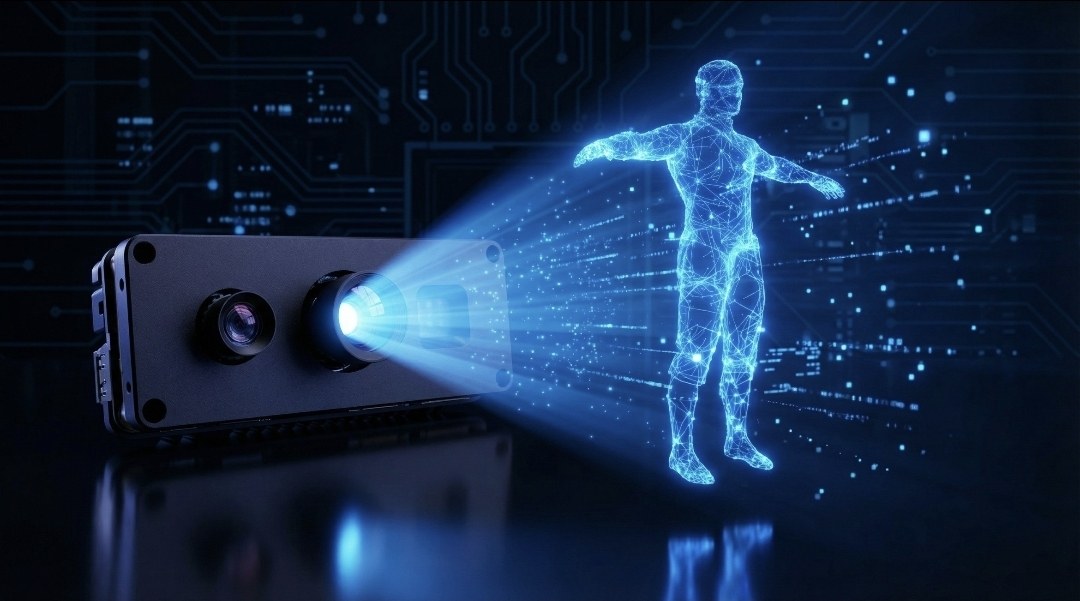
Bolt is the first company in the fitness industry to combine 3D body scanning with robotic recovery. Our Time-of-Flight camera system creates a real-time 3D map of every member's unique body shape, posture, and surface contours, with no physical contact and no manual input from staff.
This proprietary integration feeds directly into the AI calibration layer, ensuring that every session is personalized before the robotic arm ever moves. Patent pending.
Bolt's AI engine processes the body scan data and configures robotic position, applied pressure, session duration, and massage routine, all in real time, all specific to that member's body on that visit.
The robotic arm delivers precision percussive therapy to each calibrated muscle group, following the AI-generated routine with consistent, repeatable force that no human therapist can match for uniformity.
2 minutes of Bolt equals 15 minutes of manual percussive therapy for a single muscle group. A full 12-minute session delivers proven better recovery than a 90-minute traditional massage.
Proven better recovery than a 90-minute traditional massage. A fraction of the cost. Zero staff. Fully automated.
Expensive, time-consuming, and inaccessible for most gym members. Most skip recovery entirely, until now.
Exercise damages tissue. That is not a side effect of training - it is the mechanism. Eccentric muscle contractions create microtears in muscle fibers. Metabolic waste accumulates. Fascia tightens. Compensation patterns develop. The body adapts, but only if the structural damage is addressed.
Most gym members address some of this. They hydrate. They sleep. They use a sauna, a cold plunge, or compression boots. These are valuable tools. But they address circulation, inflammation, and the nervous system. None of them address the musculoskeletal system directly.
The musculoskeletal system - the muscles, connective tissue, and fascia that hold the body together and generate force - requires direct mechanical intervention at therapeutic depth to release restriction, restore fiber alignment, and clear the structural tension that accumulates with training load. Without that intervention, tightness becomes chronic, compensation patterns become structural, and performance plateaus or declines regardless of how well everything else is managed.
There is only one recovery modality that delivers direct mechanical intervention at therapeutic depth to the musculoskeletal system: manual soft tissue therapy. Massage. And for most gym members, it is completely inaccessible. It requires a licensed therapist, an appointment, 60 to 90 minutes, and $100 to $150. Most members skip it entirely. The gap between what recovery requires and what gyms can actually deliver has never been closed.
Until now.
Percussive therapy, when delivered by a clinician or researcher using a controlled protocol, replicates the mechanical effects of manual massage at a fraction of the time. The key word is delivered. Self-administered massage guns, applied by an untrained user to their own body, are an entirely different clinical category. The studies that matter - the ones that demonstrate genuine therapeutic equivalence to manual therapy - involve investigator-applied or clinician-applied protocols with controlled pressure, controlled positioning, and controlled delivery patterns. Bolt's robotic system belongs to that category.
The most compelling, highest-quality studies on percussive therapy are not self-administered. They involve clinician- or researcher-delivered protocols, the same category Bolt's robotic system belongs to. Bolt's session architecture is supported by 4 foundational studies and a broader evidence base of 19+ clinical publications on percussive therapy and exercise recovery.
Massage guns and foam rollers rely on self-administered evidence. Bolt does not. When you combine clinician-delivered results with the broader body of self-administered studies, the conclusion is clear: Bolt is the most efficient recovery product in the world.
"The most compelling, highest-quality studies on percussive therapy are not self-administered. They involve clinician- or researcher-delivered protocols, the same category our robotic system belongs to. When you combine those results with the broader body of self-administered studies, you can see why we believe Bolt is the most efficient recovery product in the world."
Because Bolt scans and calibrates before every session, returning members receive an increasingly optimized experience. The system adjusts for posture patterns and body changes, something a human therapist with a full schedule rarely achieves.
Force limits, pressure sensors, and real-time body-position monitoring ensure the robotic arm never exceeds safe therapeutic ranges. Sessions can be stopped by the member instantly with a single input. No therapist license is required to operate the unit.
Apply to become a pilot partner and be first to deploy Bolt in your gym.